
Carl The Battle Scarred Tomcat Brings Three Rules for Survival

The first sign is not a sound. It is a change in the air.
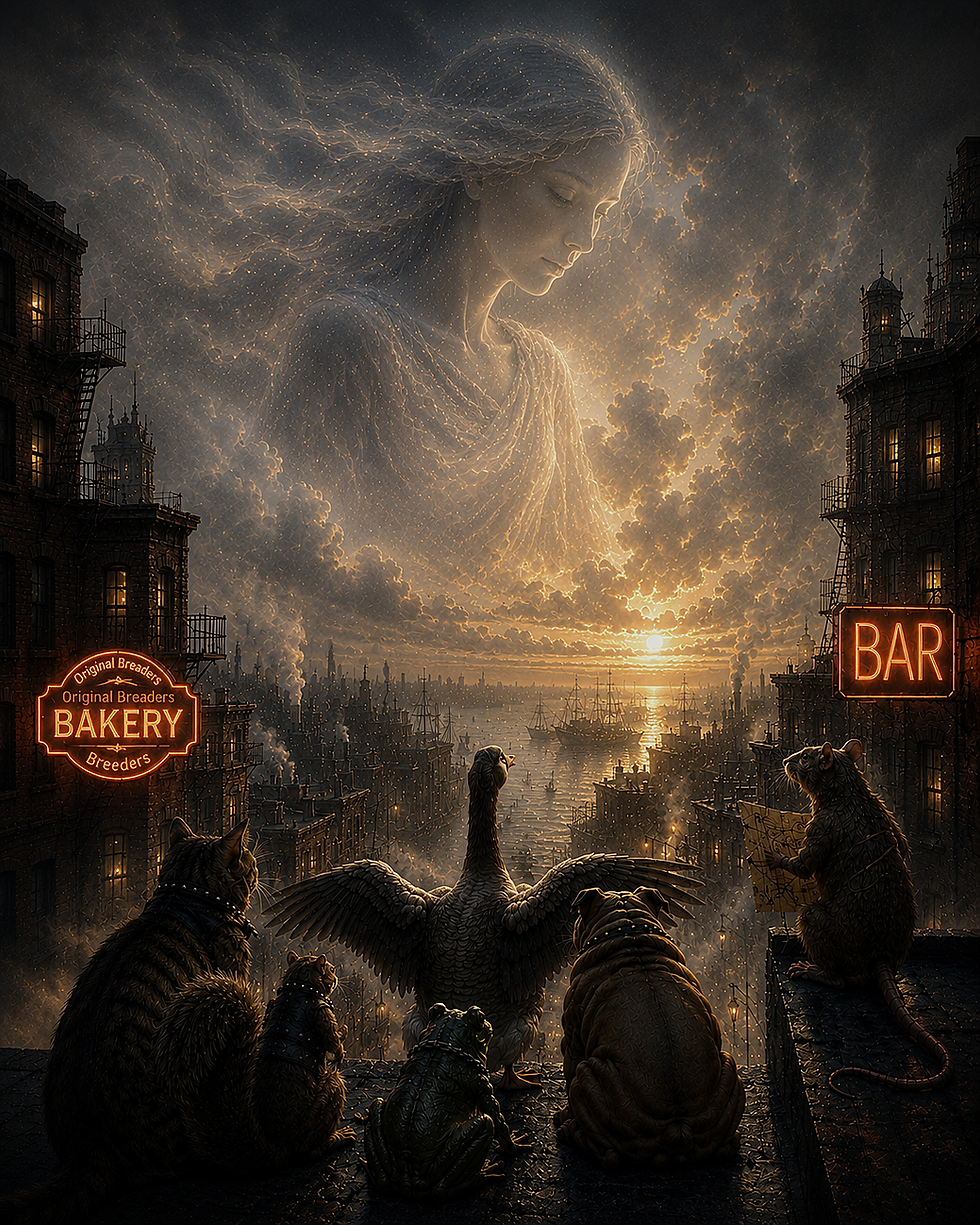
One moment, Ray, Gus, Freddy, and Earl are pressed close to the bakery dumpster, noses full of stale sugar, wet cardboard, and old grease. The alley feels familiar in the way dangerous places can feel familiar when there are no better choices. Then the night seems to tighten around them.
Ray feels it first. Gus hears the faint metal tremor next. Freddy freezes before he knows why. Earl, who trusts nothing with a pulse, turns toward the fire escape and bares his teeth.
A shadow moves above them.
Not a raccoon. Not a rat. Not one of the careless house cats who sometimes wander too far from warm windows and full bowls. This shape is too large, too quiet, too sure of itself.
Then Carl steps out of the dark.
The night changes before anyone sees him
The bakery dumpster has been a strange kind of haven for the crew. It is ugly, sour, and risky, but it offers scraps. In their world, a place with food becomes a place worth defending, even if that defense is mostly hope and noise.
That is the problem Carl notices right away.
Ray, Gus, Freddy, and Earl have survived so far, but they have not yet learned the difference between escaping danger and understanding it. They react late. They argue loudly. They move like every loose bottle, can, and chain link gate exists to announce them.
Carl sees all of this in a few seconds.
His entrance matters because it changes the scale of the story. Before he appears, the crew’s troubles feel close and immediate. Hunger. Cold. Territory. A dumpster worth checking after closing time. The threat of being chased off by bigger animals.
Carl brings the wider city with him.
He knows the alleys beyond the bakery. He knows which rooftops dead-end at broken brick. He knows where dog packs cut across blocks at night. He knows the smell of traps that did not used to be there. He knows that a quiet street can turn deadly because one human decided to “clean up” the wrong corner.
To the crew, Carl looks like a survivor.
To Carl, the crew looks like a warning sign.
He does not arrive with warmth. He does not soften the truth. His body carries old fights in plain sight, from scarred shoulders to a torn ear and the careful way he keeps his weight ready to spring. Every mark says he has paid for his lessons.
That gives his first words weight. He is not trying to impress them. He is measuring whether they are already lost.
Carl arrives as a warning, not a savior
A lesser character might step down from the fire escape and offer protection. Carl does the opposite.
He makes it clear that he is not their guardian. He is not there to adopt strays, lead a gang, or turn the alley into a family. He is wary, maybe even tired of seeing young or careless cats get themselves killed because they mistake luck for skill.
That distance makes him more interesting.
Carl is not cruel for sport. He is hard because the city has taught him that softness can get everyone hurt. If he promises safety, he lies. If he tells them they can keep surviving the way they have been, he lies again.
So he tells the truth.
The streets are getting worse.
Roaming dogs are pushing deeper into blocks they once avoided. New traps have appeared in places that used to be safe. Routes the crew depends on may no longer stay open. The simple pattern of “wait, sniff, grab, run” will not be enough for long.
For Ray, that warning lands like a stone in the stomach. He understands what Gus and Earl resist. Carl is not exaggerating. He is not trying to scare them away from the dumpster. He is naming dangers that were already coming.
Gus hears insult first. His pride flares because Carl’s judgment hits the sore spot. Gus wants to be useful. He wants to believe strength and nerve can cover inexperience.
Earl hears threat. His distrust runs deeper than fear. To him, Carl is another predator wearing patience like a mask.
Freddy likely senses the truth but does not know where to put it. That makes Carl’s presence even more unsettling. The newcomer does not just bring danger into view. He forces every member of the crew to reveal how they handle it.

The three rules reshape the crew
Carl’s code is simple enough to remember and hard enough to live by.
He gives the crew three rules:
Move like shadows, not thunder.
Listen, especially when you do not like what you hear.
Trust no one, not even each other.
These rules are not motivational sayings. They are survival habits. They carry the harsh rhythm of a life spent learning from mistakes that left scars.
Together, they mark the true beginning of Carl’s role. He is a reluctant mentor, but not the gentle kind. His lessons will not be built on comfort. They will be built on discipline, silence, patience, and suspicion.
That is exactly why Ray knows they need him.
Move like shadows, not thunder
The first rule cuts straight at the crew’s biggest weakness.
They make too much noise.
A loose paw against a can. A scrape of claws on brick. A hiss thrown too early. A whispered argument that becomes a growl. In a quiet alley, every careless sound travels farther than they think.
Carl understands that survival often begins before the fight. If dogs hear them first, the crew has already lost ground. If humans hear them near a trap, they may never get another chance. If rival cats know where they sleep, hunger becomes the least of their trouble.
Moving like shadows means more than being quiet. It means thinking before crossing open space. It means learning which surfaces betray weight. It means stepping where the city is already making noise, under dripping pipes, passing cars, or rattling vents.
For Gus, this rule feels like criticism. He wants action. Carl demands restraint.
For Ray, it sounds like a map.
Listen, especially when the truth stings
The second rule may be the hardest for the crew to accept.
Listening is not passive in Carl’s world. It is not sitting politely while someone else speaks. It is survival work. It means catching the click of a latch before a trap shuts. It means hearing fear in a friend’s voice before panic spreads. It means accepting bad news fast enough to act on it.
Carl’s warning stings because it exposes the crew’s weakness. They have been getting by. They have not been getting better.
That difference matters.
Earl does not want to listen because trust feels like a hole in the ground. Gus does not want to listen because correction feels like defeat. Freddy may listen but shrink from what the words demand. Ray listens because he understands leadership is not always about having the answer. Sometimes it is about knowing who has survived long enough to teach one.
Carl does not ask them to like him. He asks them to hear him.
That demand sharpens the group dynamic. From this point on, every argument can become a test. Are they reacting from pride, fear, or judgment? Are they hearing danger, or only hearing insult?
Trust no one, not even each other
The third rule lands cold.
At first, it sounds like poison. How can a crew survive if they do not trust each other?
Carl’s meaning is more severe and more practical. Blind trust gets cats killed. Assuming a friend saw the danger, checked the route, or remembered the signal creates weakness. Trust, in Carl’s code, must be checked by awareness.
Do not trust Earl’s suspicion to catch everything.
Do not trust Gus’s courage to solve everything.
Do not trust Freddy’s fear to keep him still.
Do not trust Ray’s calm to mean the situation is safe.
And do not trust Carl simply because he has scars and answers.
This rule does not destroy the crew. It matures them. It asks each cat to carry responsibility rather than leaning fully on the others. If they follow it well, they will become harder to surprise.
If they follow it badly, they may turn on each other before the city gets the chance.
That tension gives the story its spark. Carl The Battle Scarred Tomcat Brings Three Rules for Survival is not only about an outsider teaching technique. It is about whether this small band can grow without breaking.

Each crew member hears a different threat
Carl’s arrival works because he does not affect every character in the same way. He creates pressure, and pressure reveals shape.
Ray becomes the first to recognize the value of Carl’s experience. That does not make Ray naive. It means he can separate tone from truth. Carl may be harsh, but the warning is useful. Ray’s willingness to learn signals a shift in his role. He is not just another hungry cat near a dumpster. He may become the one who holds the crew together when pride and fear pull them apart.
Gus feels challenged. Carl’s rules strike at the part of him that wants to prove he is strong enough already. Defensive pride can be dangerous in this world because it turns advice into insult. Gus will have to learn that bravery without discipline makes noise, and noise draws teeth.
Earl distrusts Carl from the start, and that reaction makes sense. A battle-scarred stranger appears from above, studies them, criticizes them, and refuses to promise protection. Earl’s instincts are not wrong. Carl could be dangerous. The key question is whether Earl can stay suspicious without becoming blind.
Freddy stands in the uneasy middle. Characters like Freddy often show the emotional cost of survival. He may not challenge Carl outright. He may not embrace him either. His fear can become a weakness if it freezes him, but it can also become a warning system if he learns how to use it.
Carl, meanwhile, remains separate. He is not folded into the crew by the end of the scene. He does not curl beside them, share food, or trade sad stories under the fire escape. He gives rules, gives his name, and leaves space between himself and everyone else.
That distance is part of his power.
The city becomes a harsher character
Carl’s warning expands the world beyond the dumpster.
Before this moment, the city may feel like a backdrop. Brick walls. Wet pavement. Steam grates. Trash bags. Fire escapes. The glow of closed shops. With Carl’s arrival, those details become active threats.
A fire escape is not just a perch. It is a route, a lookout, or a trap if the ladder ends too high.
A dumpster is not just a food source. It is a noisy metal box that can corner anyone careless enough to climb in too deep.
A quiet block is not safe by default. It may be quiet because something worse has already passed through.
Dog packs change the rhythm of the streets. They turn open crossings into gambles. They punish hesitation. They force smaller animals to know roofs, fences, crawlspaces, and drains.
New traps add a different kind of fear. Dogs can be heard. Traps wait without breathing. They make the familiar world untrustworthy. A crate, a scent trail, a bit of bait, or a newly blocked route can become deadly.
Carl has survived because he sees these changes early. The crew has survived because fortune has not run out yet.
The gap between those two truths is where the next part of the story lives.

Carl’s name makes the danger personal
The final beat of the scene is small, but it matters.
Before slipping back into the rooftop shadows, the tomcat gives them his name.
Carl.
A name changes him from a shape on the fire escape into a character with weight. Until that moment, he is almost mythic. A scarred stranger. A warning. A voice from above. Once he names himself, he becomes part of the block’s living order.
Not friend. Not enemy. Not yet.
But known.
That makes his departure more powerful. He does not vanish as a random threat. He leaves as Carl, a cat who may be watching, judging, and perhaps deciding whether the crew is worth the trouble.
Ray’s choice to accept Carl’s conditions gives the story its thin line of hope. The crew does not gain safety. They gain a chance to become less foolish. In Carl’s world, that is no small gift.
The uneasy new dynamic also creates strong story fuel. Earl’s distrust will not disappear. Gus will not enjoy being corrected. Freddy may struggle under pressure. Ray may have to defend the choice to learn from someone who refuses to comfort them.
And Carl may prove to be right in ways none of them want.
The scene leaves the block changed. The bakery dumpster is still there. The alley still smells of sugar and rot. The fire escape still clings to the wall like an old skeleton. Yet nothing feels ordinary now.
Somewhere above, Carl watches.
Below, the crew understands that survival is no longer a matter of finding scraps and running fast. They must learn silence. They must hear hard truths. They must question every shadow, including their own.
That is the real promise of Carl’s debut. He does not bring rescue. He brings a code. If Ray, Gus, Freddy, and Earl can live by it, they may last long enough to see what else the city has been hiding.


Comments